There’s a specific kind of anxiety that comes with decorating on a budget. You put in the time, you do the research, you make the updates, and then you stand back and wonder: does this look cheap? I’m here to show you how to earn an interior designer’s respect so you don’t have to continue asking yourself this question.
The good news is that looking expensive and spending a lot of money are two completely different things. Designers know this better than anyone. The details that make a room feel elevated, the things that stop people in their tracks and make them ask “who designed this?”, are almost never about price. They’re about proportion, restraint, and a few specific techniques that most people either don’t know about or consistently get wrong.
I researched what actually resonates, and distilled it all into seven things (most of which cost little to nothing) that designers genuinely respect. Let’s get into it!
1. Hang Your Curtains Higher Than You Think You Should
What it costs: $0 if you already have curtains. The price of a new curtain rod if you don’t.
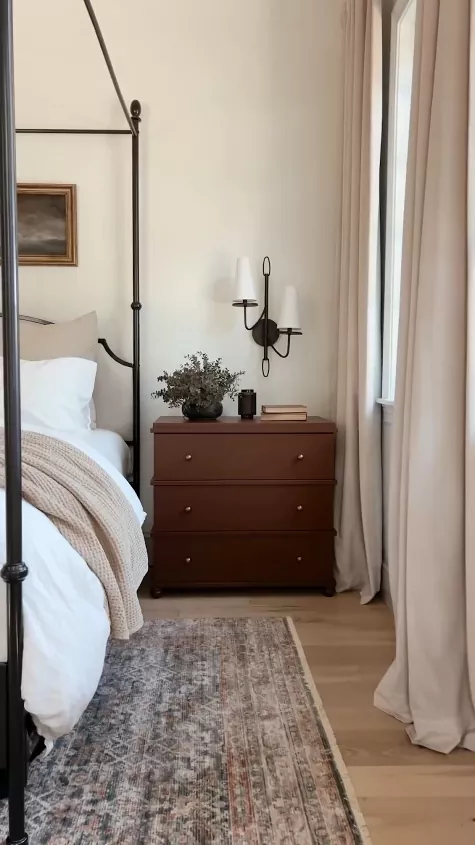
Why designers approve: Taking curtains as close to the ceiling as possible draws the eye upward and creates a sense of grandeur, instantly making a room feel taller and more architectural, even in modest spaces. This is one of the most consistently cited tricks across designer interviews, and it’s completely free if you already own curtains and a drill.
The window instantly feels larger, the ceiling appears taller, and the room takes on a more architectural presence. The curtains themselves don’t need to be expensive, but the scale makes the space feel dramatically more polished.
How a regular person does it: Move your existing curtain rod up (ideally as close to the ceiling as possible, or at minimum 4-6 inches above the window frame). Make sure your curtains are long enough to reach the floor; avoid the “floating above the floor” look, which immediately reads as unfinished. If your current curtains are too short after raising the rod, this is a great excuse to swap them for longer panels. Linen-look curtains from discount stores can cost as little as $20 and look completely elevated hung correctly.
2. Layer Your Lighting: Get Rid of the Big Overhead Light
What it costs: As little as $5-20 for a thrifted or budget lamp
Why designers approve: Bad lighting is the fastest way to kill a space. Cool white bulbs in living areas create a flat, clinical atmosphere that no amount of furniture can fix. This is one of the things designers say most consistently and it’s also one of the most commonly ignored.
Expensive interiors almost never rely on a single ceiling light to illuminate a room. Instead they layer multiple light sources: floor lamps, table lamps, wall sconces, and sometimes subtle accent lighting.
How a regular person does it: Turn off your overhead light tonight and replace it with two or three smaller light sources: a floor lamp in one corner, a table lamp on a side table, and maybe a candle or string lights somewhere. The transformation will genuinely shock you. Even a $3 burlap lamp shade at a garage sale paired with a $10 ceramic base can look straight out of a boutique hotel. Warm bulbs only! Never cool white in a living space.
3. Go Bigger With Your Rug
What it costs: Varies, but the principle costs nothing if you already have a rug- just reposition it
Why designers approve: Interior designer Penny Morrison puts it plainly: “Creating a simple room scheme and then having a big colored or patterned rug can make a room — nothing pulls a room together quite like a rug does. My favorite way to add impact with a rug is to go as large as possible, extending to about two feet out from the walls.”
Small rugs are one of the fastest ways to make a room feel unfinished. When a rug only sits under the coffee table, the furniture floats awkwardly around it. Designers almost always size rugs generously so the front legs of sofas and chairs sit comfortably on the surface, and the room suddenly feels cohesive, as if everything belongs together.
How a regular person does it: If your current rug is too small, try layering it over a larger neutral jute rug. This is a hugely popular and budget-friendly way to get the right scale without buying an entirely new rug. If you’re buying new, always size up one level from what feels right. The rug that looks too big in the store is almost always the right size in your actual room.
4. Swap Your Hardware
What it costs: $15-40 total for a set of cabinet or door handles
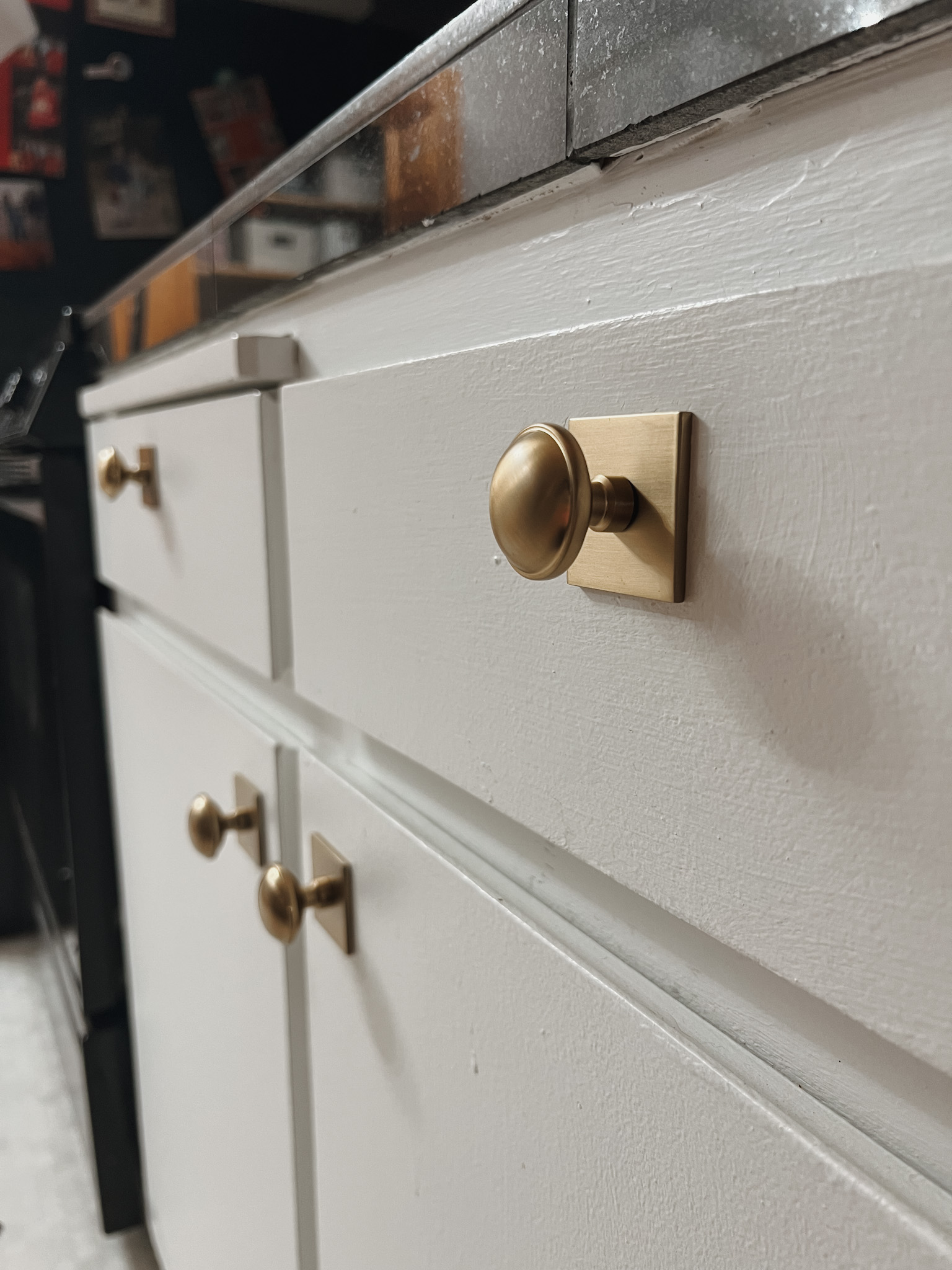
Why designers approve: Designer Morgan’s advice is simple but high impact: swap out silver or black fixtures — cabinet pulls, faucets, and drawer handles — for brass. It instantly makes everything look more expensive and refined, and it never goes out of style.
Hardware is one of those details that nobody consciously notices when it’s right, but everyone subconsciously notices when it’s wrong. Outdated brass from the 90s, generic silver bar pulls, or mismatched finishes throughout a room quietly drag the whole space down without most people being able to identify why.
How a regular person does it: Pick one metal finish and commit to it throughout the room: brushed brass, or aged bronze are strong choices right now. Replace cabinet pulls, drawer handles, and if possible door knobs in the same finish. Matching the hardware throughout the home improves design consistency and contributes to a more cohesive and stylish interior. This is genuinely one of the highest-return, lowest-cost updates you can make to a kitchen, bathroom, or any room with cabinetry.
5. Edit Ruthlessly: Less Is Always More
What it costs: $0. This one literally saves you money.
Why designers approve: No matter how much you spend on decor, a cluttered space can never look elevated. Investing in smart storage or simply paring down can make a world of difference.
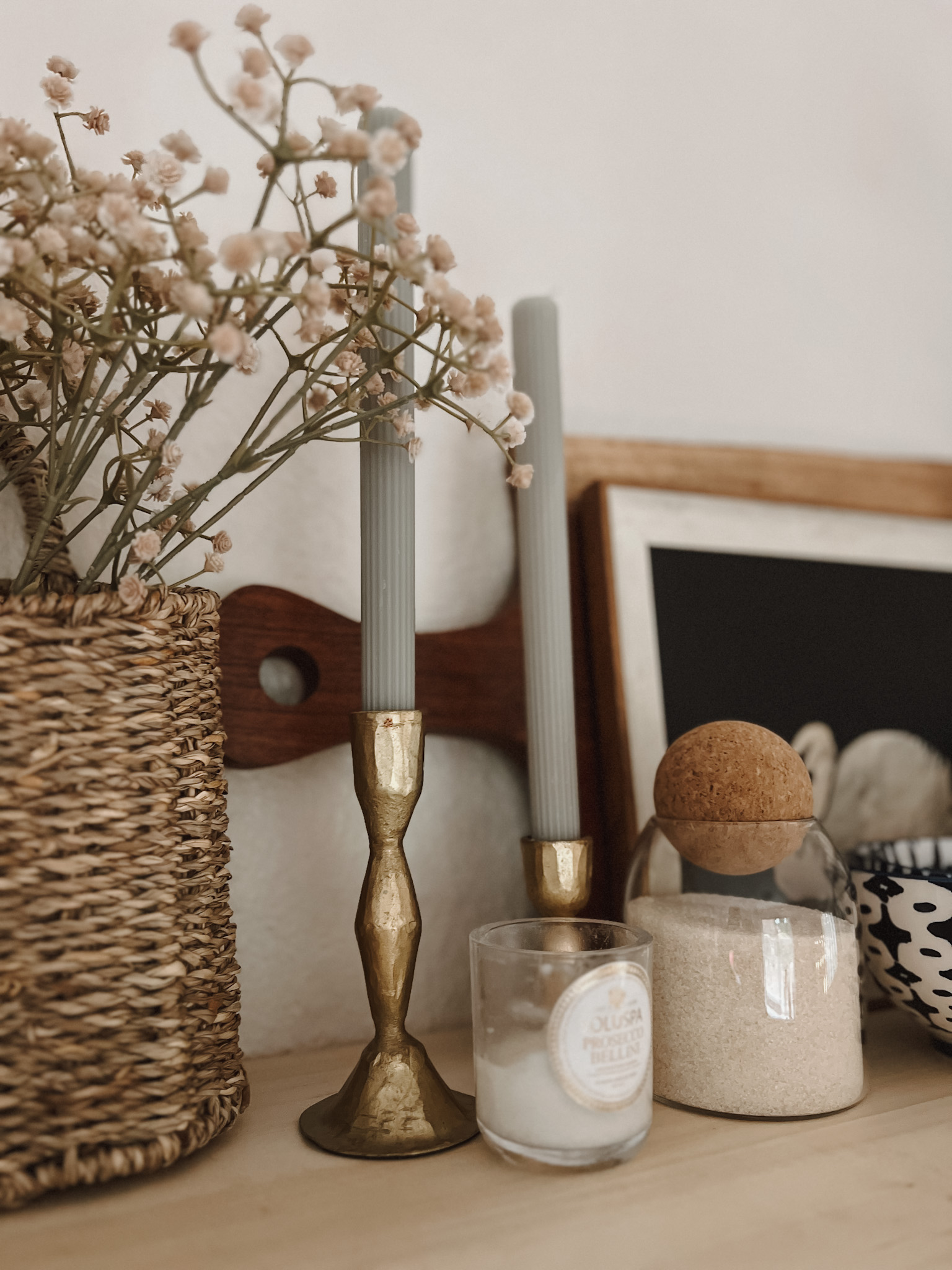
Expensive homes rarely fill every surface. Instead they rely on a smaller number of objects with breathing room around them. This restraint allows each piece to stand out, and the room feels curated instead of cluttered.
This is the design principle that costs the least and pays back the most. The difference between a room that looks designed and a room that looks decorated is almost always editing.
How a regular person does it: Take everything off one surface (a shelf, a console table, a mantle) and only put back half of what was there. Live with it for a week. You will almost certainly find you prefer it. The items you removed can go to another room, into storage, or to a donation bin. Repurposing furniture, lighting, or decorative pieces not only saves on the cost of buying new, but also helps create a more layered, curated look. Introducing an unexpected piece into a different space can break up predictable layouts and make interiors feel more personal and design-led.
6. Add Architectural Interest to Your Walls
What it costs: $30-80 for materials depending on the technique
Why designers approve: Flat drywall can make rooms feel unfinished. Adding even simple molding like picture frame trim, panel molding, or taller baseboards introduces shadow and dimension. The walls begin to feel intentional rather than purely functional.
Walls with architectural detail are one of the biggest visual signals of a well-designed space. The good news is that you don’t need original Victorian crown molding to get the effect, even modern DIY techniques can convincingly replicate the look for very little money.
How a regular person does it: The most beginner-friendly options are board and batten (vertical wood strips painted the same color as the wall), picture frame molding (simple trim arranged in rectangles on the wall), or even just a painted accent wall in a deep, rich color. Vertical lines whether from board and batten, beadboard panels, or painted vertical stripes, can instantly make a room seem taller and more open without a full renovation. Paint everything! The trim and the wall should be the same color for the most polished, cohesive result.
7. Repeat a Finish or Material Throughout the Room
What it costs: $0, this is about how you shop and style, not what you buy
Why designers approve: Expensive interiors usually avoid mixing too many metals or finishes. Instead they repeat a small number of materials consistently. Perhaps brass hardware, black lighting fixtures, and warm wood tones. The repetition creates cohesion, and the room feels composed.
This is the secret that separates rooms that look designed from rooms that just look decorated. It’s not about the price of individual pieces, it’s about the visual language they create together. When a room has too many competing finishes, materials, and colors, the eye doesn’t know where to rest and the space reads as chaotic regardless of how nice each individual piece is.
How a regular person does it: Pick two to three finishes and let them repeat. Maybe it’s warm wood tones, matte black, and cream. Maybe it’s brass, white, and natural linen. Whatever your palette, let it show up in at least three places in the room such as your hardware, your lighting, your textiles, your frames. Choosing pieces that complement one another rather than match exactly creates a more considered, curated space that reflects personal taste and feels far more elevated than a perfectly matched set.
The Bottom Line
The common thread through all seven of these? None of them are about buying more stuff. They’re about proportion, placement, restraint, and a few specific techniques that designers use constantly but rarely explain out loud. The anxiety of “does my home look cheap?” almost always comes from one of these seven things being off and the fix is almost always free or close to it.
Start with curtains and lighting. Those two changes alone will make your room feel like a completely different space. Have questions? Drop them below!